Enterprise AI Agents Tripled: Salesforce Index Key Findings
Enterprise AI Agents Tripled: What the Salesforce Index Proves
Introduction
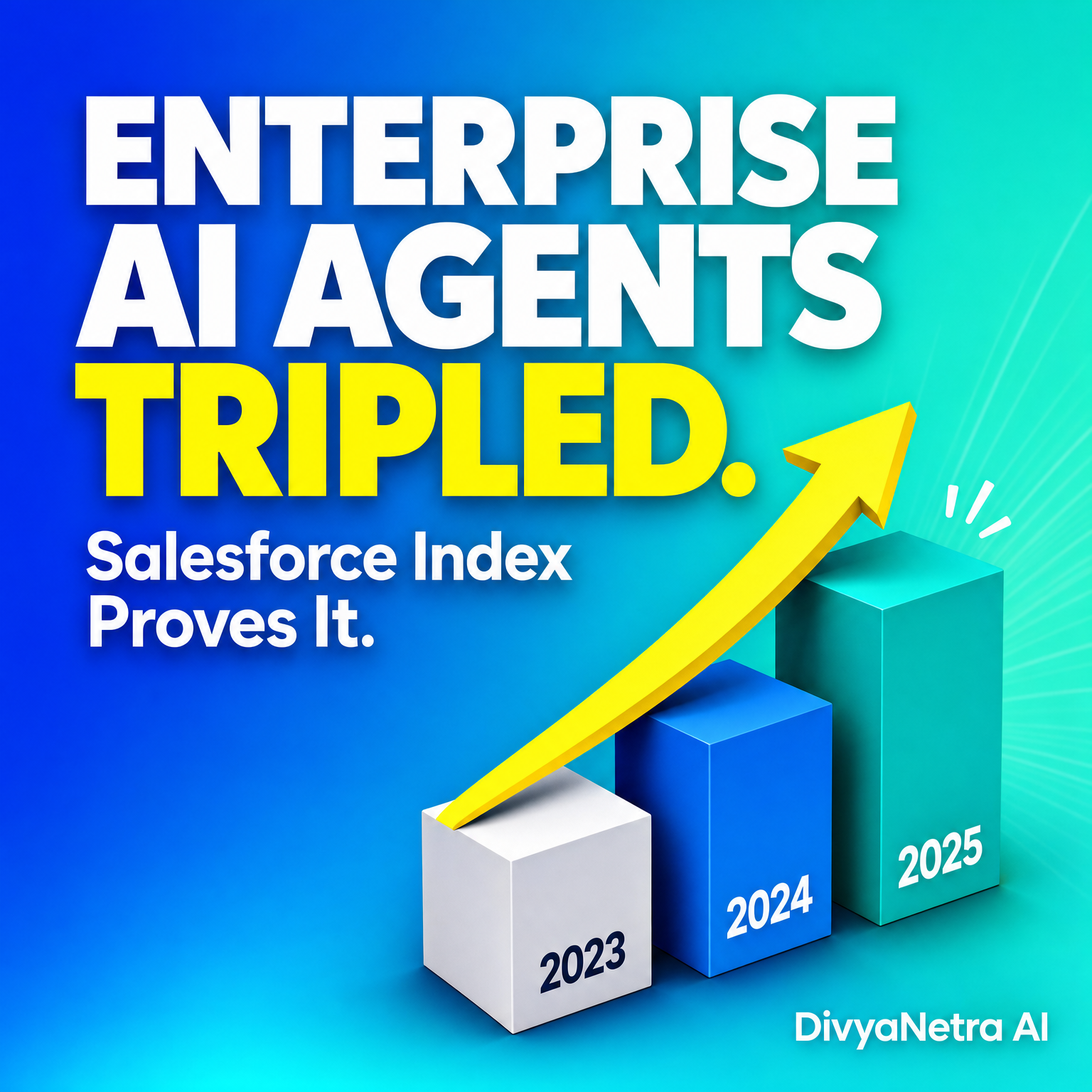
The benchmark for enterprise technology deployment has officially shifted. According to market research released on August 7, 2026, by Futurum Group highlighting the latest Salesforce Agentic Enterprise Index, the volume of active enterprise AI agents deployed across global organizations has officially tripled.
This dramatic surge signals that enterprise artificial intelligence has passed its experimental phase. Organizations are no longer content with passive generative text tools or exploratory pilot projects. Instead, enterprises are deploying autonomous agents directly into production environments to manage customer relations, streamline supply chain logistics, automate financial reconciliations, and handle complex technical workflows.
For executive teams and IT leaders, this data point is not merely a stat—it is an operational ultimatum. The tripling of active agents proves that market leaders are actively restructuring their operations around autonomous execution. Understanding why this acceleration occurred and how to harness it is essential to maintaining your competitive edge.
Shift from Copilots to Autonomous Enterprise AI Agents
To understand why deployment numbers tripled so rapidly, one must look at the evolution of AI capabilities. Over the past several years, enterprises invested heavily in "copilots"—conversational interfaces that draft emails, summarize documents, or answer internal knowledge-base queries. While useful, copilots still require constant human prompt engineering and manual execution.
The breakthrough highlighted by the Salesforce Index reflects a fundamental transition toward fully functional, agentic enterprise architecture. Modern enterprise AI agents do not simply suggest solutions; they complete multi-step tasks across disparate enterprise software platforms without requiring continuous manual intervention.
Key capabilities driving this adoption include: - Autonomous Multi-Step Execution: Agents can break down high-level business objectives into sequential tasks, querying databases, running business logic, and updating record systems seamlessly. - Cross-Platform Integration: Unlike legacy tools locked within single SaaS silos, agentic systems connect via APIs across ERP, CRM, and data warehousing layers. - Dynamic Decision-Making: When an anomaly occurs, sophisticated agents adapt their workflow path based on pre-set operational rules rather than breaking down completely.
This operational shift directly aligns with how AI executes business strategies: from analysis to action, giving leadership the ability to turn corporate strategy directly into automated execution.
The Core Drivers Behind the 3x Growth Surge
The tripling of active agents recorded in the index is propelled by three primary operational drivers: enterprise data maturation, ROI pressure, and architectural shifts.
1. Data Unification Maturity
Early AI attempts suffered from fragmented, inaccessible enterprise data. Today, businesses have made substantial strides in constructing unified data foundations. When transactional and context data are seamlessly accessible, agents can execute complex workflows without hallucinating or running into missing information blocks. Integrating a clean platform for unified data for business guide to smarter decisions has proven to be the single biggest predictor of successful agent deployment.
2. Mandatory Demonstration of ROI
C-suite patience for passive AI experiments ran out. Business leaders now demand measurable, bottom-line returns. Autonomous agents deliver immediate financial ROI by reducing routine process run-times from days to seconds, lowering manual labor overhead, and eliminating human operational error in high-volume transactions.
3. Move Away from Static Reporting
Legacy management relied heavily on visual dashboards for human analysis. However, as agent workflows take over operational execution, traditional monitoring tools are changing. The enterprise shift reinforces predictions on why enterprise dashboards will become obsolete by 2028, replacing passive visual graphs with proactive, self-executing agent monitoring environments.
How Enterprise Leaders Must Adapt Their AI Roadmap
The rapid adoption of agentic technology means enterprise leaders must rethink how they plan, govern, and deploy software. To maintain pace with the market trends validated by the Salesforce index, organizations should focus on five tactical steps:
- Audit High-Volume Manual Workflows: Identify operational bottlenecks in finance, support, IT operations, and sales operations where multi-step workflows currently require heavy human oversight.
- Prioritize API and Tool Access: Ensure your internal applications expose clean, secure RESTful or GraphQL APIs so autonomous agents can securely perform read and write operations.
- Establish Rigorous Security & Governance: Before granting agents permission to conduct financial transactions or access sensitive customer data, run thorough pre-deployment checks. Reviewing an AI agent security testing pre-deployment guide ensures your system avoids logical vulnerabilities and data leaks.
- Define Guardrails and Human-in-the-Loop Thresholds: Implement operational bounds. Allow agents complete autonomy over low-risk, standard tasks while requiring human approval for actions exceeding defined financial or strategic thresholds.
- Upskill Teams for Agentic Orchestration: Transition employees from operational task executors to agent managers and process architects, maximizing human capital efficiency.
Frequently Asked Questions
What did the Salesforce Agentic Enterprise Index reveal about enterprise AI agents?
The report revealed that the number of active, operational enterprise AI agents has tripled year-over-year. Organizations are rapidly moving from conversational chatbots to autonomous agents capable of executing multi-step business workflows.
How do enterprise AI agents differ from traditional AI copilots?
Traditional copilots act as passive assistants that generate text or suggest actions for human review. Autonomous enterprise AI agents operate with agency, executing complex end-to-end tasks, interacting across software stacks, and making operational decisions within guarded parameters.
What is the biggest operational risk of deploying autonomous AI agents?
The primary risk involves ungoverned agent execution, such as data leaks, improper transactional permissions, or logical loops. Organizations must implement rigorous security testing, real-time auditing, and strict guardrails before pushing agents to production.
How can businesses prepare their architecture for agentic AI?
Businesses must focus on unifying their fragmented data layers, establishing clear API integrations across systems, defining robust governance protocols, and moving away from static visual dashboards toward action-oriented AI orchestrations.
Conclusion
The data revealed in the Salesforce Agentic Enterprise Index leaves no room for ambiguity: enterprise AI agents are rapidly becoming the operational backbone of modern commerce. The tripling of active agent deployments marks the official transition from passive, conversation-based AI tools to autonomous, execution-focused digital workforces.
Organizations that act now to upgrade their data architecture, establish robust governance frameworks, and deploy secure autonomous agents will capture significant market share and operational efficiencies. Conversely, those relying on fragmented systems and passive copilot models risk falling behind competitors who operate at agentic speeds.
At DivyaNetra AI, we help enterprise organizations design, secure, and scale high-performance agentic solutions tailored to complex operational needs. Reach out to our team today to evaluate your enterprise readiness and accelerate your autonomous AI transition.