IBM Together AI Deal: What Open AI Inference Means for Scaling
IBM and Together AI Deal: What Open Inference Means for Scaling AI
Introduction
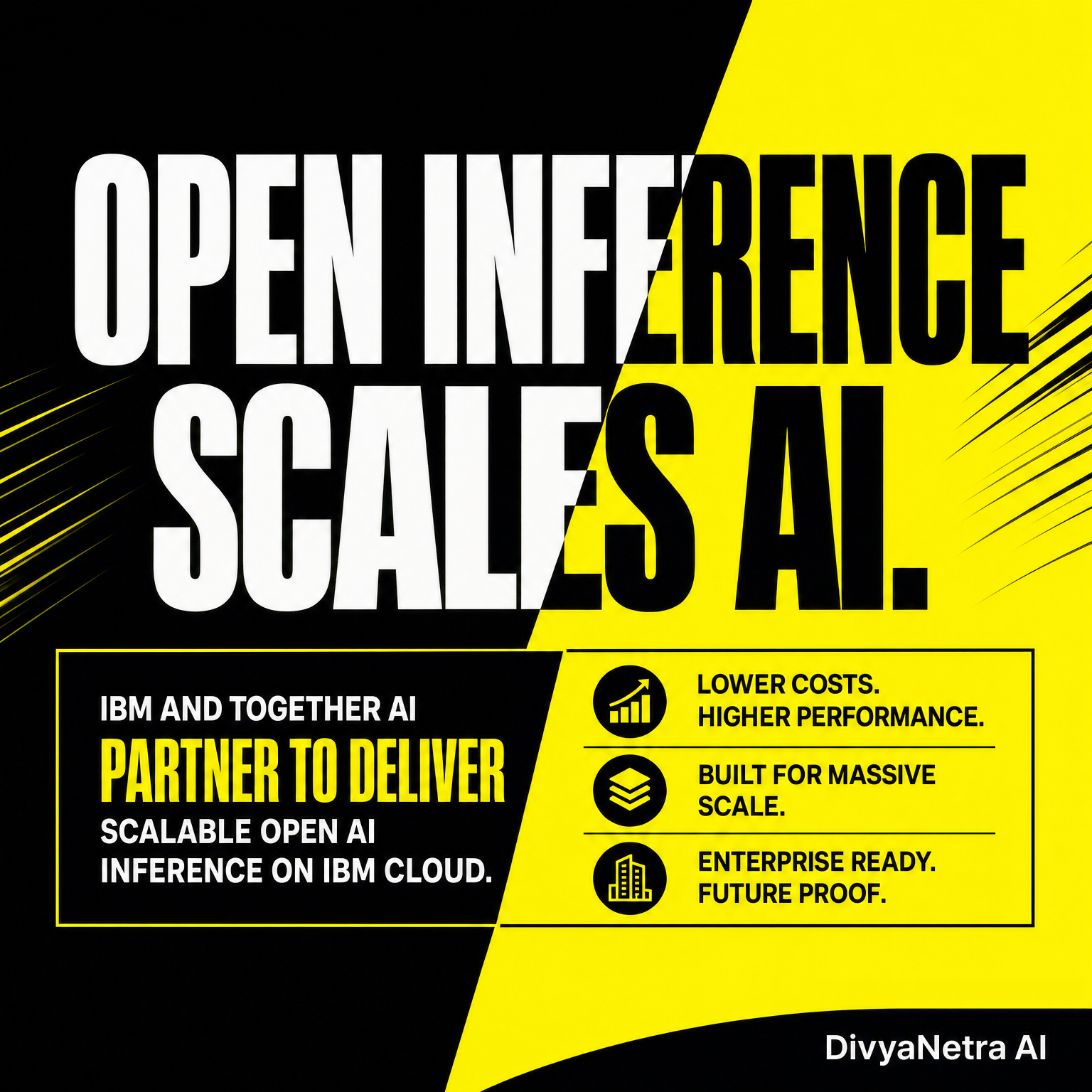
On August 11, 2026, IBM and Together AI signed a multi-year agreement to scale open-source AI inference using advanced NVIDIA GPU infrastructure on IBM Cloud. This strategic alliance directly targets the biggest bottleneck in modern enterprise artificial intelligence: the cost, speed, and rigidity of running AI models in production.
For technology leaders, this announcement signals a major pivot in how enterprise software is built and deployed. As adoption surges and enterprise AI agents tripled across frontline operations, organizations can no longer afford expensive, closed-box API calls for high-volume tasks.
By bringing Together AI's market-leading inference optimization engine onto IBM’s global hybrid cloud compute platform, the deal establishes a enterprise-grade foundation for open AI inference. It demonstrates that open-source models are no longer just experimental alternatives—they are primary tools for scalable enterprise AI.
Breaking Down the IBM Together AI Deal: Why Open AI Inference Matters
The core innovation of this partnership lies in combining software-level inference acceleration with high-performance physical hardware. Together AI has built a reputation for delivering token generation speeds that significantly outperform standard cloud hosting solutions. Pair that speed with IBM Cloud’s security, compliance frameworks, and NVIDIA GPU clusters, and the combination yields a robust alternative to hyperscale closed API providers.
As reported by Network World on the IBM and Together AI collaboration, bringing open-source model inference into enterprise cloud ecosystems helps businesses bypass standard platform locks. Furthermore, observing how IBM bets on cheap, open-source inference to take on hyperscalers highlights a fundamental truth: inference economy is the real battleground for modern compute dominance.
Key structural advantages of open inference include: - Predictable Cost Models: Moving away from per-token markup pricing toward direct compute provisioning drastically reduces unit economics at scale. - Ultra-Low Latency: Optimized inference engines maximize GPU memory bandwidth, delivering near-instantaneous token processing for real-time agent responses. - Model Flexibility: Organizations can swap, fine-tune, or chain open weights (such as Llama, Mixtral, or specialized domain models) without refactoring underlying cloud pipelines.
The Economics of Open-Source AI Scaling for Enterprise Workloads
When evaluating modern AI expenditures, leaders quickly realize that model training represents only a fraction of total capital outlay. In production environments, AI inference costs account for 80% to 90% of total operational spend. Every automated agent task, automated document scan, and internal query drains compute resources perpetually.
When using AI for strategic decisions, business decision-makers must evaluate unit cost per million tokens alongside model accuracy. Open inference hosted on enterprise cloud infrastructure delivers structural unit-cost advantages that proprietary APIs struggle to match over high volumes.
For example, a financial enterprise processing millions of customer service routing requests daily can spend tens of thousands of dollars per month on closed commercial endpoints. By transitioning those workloads to open models optimized via Together AI on IBM Cloud, the enterprise retains strict data governance, guarantees data isolation, and lowers inference operational costs by up to 60%.
This structural economic shift enables enterprises to expand AI initiatives from passive analytical dashboards into real-time operational execution, creating systems where AI executes business strategies autonomously across critical workflows.
Actionable Strategies to Implement Open AI Inference
To capitalize on the shift toward open inference architectures, enterprise technology leaders should adopt a deliberate, phased approach:
- Audit Production Token Utilization: Identify high-volume, low-complexity tasks currently running on expensive closed APIs that could be handled by lightweight open models.
- Evaluate Hybrid Cloud Readiness: Assess whether your current compliance standards require dedicated isolated cloud instances or hybrid cloud bare-metal GPU clusters.
- Benchmark Inference Engine Performance: Test open models on optimized inference stacks to measure actual throughput (tokens/second) against production latency requirements.
- Enforce Strict Data Boundaries: Ensure prompt inputs and model outputs remain contained within designated cloud environments without passing through unauthorized third-party logging layers.
- Standardize Multi-Model Pipelines: Build orchestration layers that route complex reasoning tasks to specialized models while directing high-throughput tasks to low-cost open inference engines.
Conclusion
The IBM and Together AI agreement marks a turning point for open-source AI scaling. By delivering high-throughput, low-latency infrastructure on IBM Cloud, this partnership makes open-source AI models a viable, cost-effective default for enterprise workloads.
As inference costs replace training budgets as the primary AI line item, organizations that adopt open AI inference will gain a distinct competitive edge in speed, customization, and unit economics. For modern businesses aiming to deploy scalable AI agents and real-time execution engines, the path forward is clear: open infrastructure is essential for sustainable growth.